

ARTIST DEVELOPMENT
OHSH Projects offers one-to-one artist development sessions for those looking to sharpen their practice, refine their direction, and gain clear, practical feedback. Rooted in our curatorial approach—spanning exhibitions, open calls, and working closely with artists at different stages—these sessions are structured conversations designed to be direct, constructive and useful.
Whether you want to discuss a specific body of work, prepare for an application, or think more critically about how your practice is positioned, we’ll work through it with you.
To book a session please follow the links below and we will get in touch via email to book your session.
If you have any questions please email info@ohshprojects.com
Online session via Google Meets to discuss your artistic practice.
In person session (within Greater London) to discuss your artistic practice.
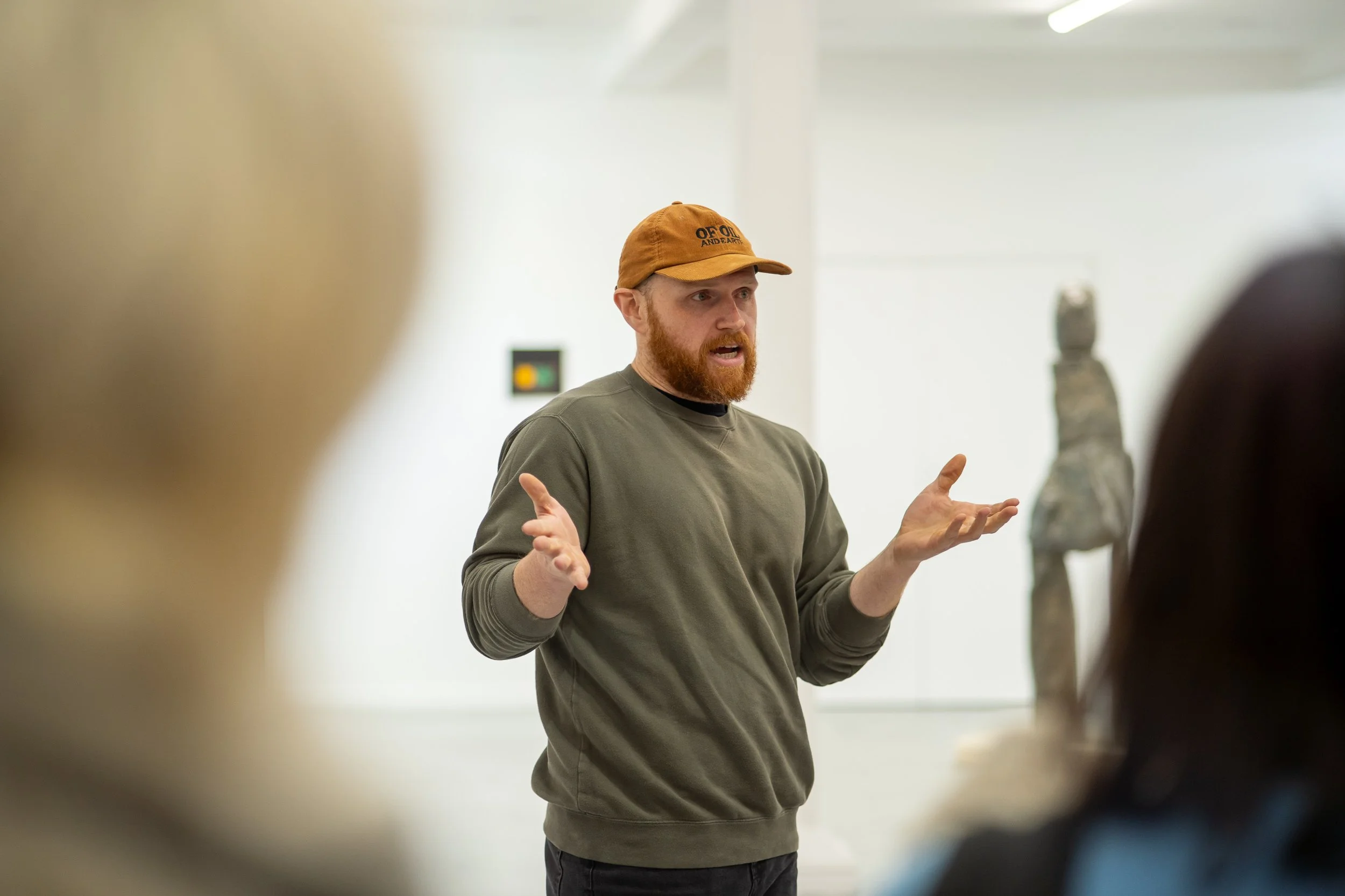
HENRY HUSSEY, DIRECTOR & CO-FOUNDER, OHSH PROJECTS
Henry Hussey is a London-based multidisciplinary artist and curator whose practice spans textile, glass, ceramic, painting and film. His work is known for being emotionally direct and materially rigorous, often exploring mythology, symbolism and the body through a language that sits between beauty and brutality.
He studied at Chelsea College of Arts and went on to complete an MA at Royal College of Art. His work has since been exhibited internationally, from London to Hong Kong and New York, and is held in major public and private collections.
Alongside his own practice, Henry is deeply embedded in arts education. He regularly tutors across leading UK institutions including Goldsmiths (University of London), Royal College of Art, City & Guilds of London Art School, Chelsea College of Arts, and Arts University Bournemouth. This ongoing teaching means he is not only active in his own practice, but constantly in dialogue with emerging artists and current academic frameworks.
As co-founder of OHSH Projects, Henry has also curated and delivered exhibitions across London, working closely with artists at different stages of their careers. This combination—studio practice, international exhibition experience, and hands-on teaching—gives him a rare perspective.
In a development session, Henry offers more than opinion. He understands how work is made, how it is read, and how it is positioned. His feedback is grounded, direct and shaped by both lived artistic and curatorial experience.